AI FRONTIER

What changed — should you switch or hold?

41 briefs. Happened → switch take → money/risk. Skip the ones that don’t touch your stack.

AI Frontier briefs
frontier frontierpricingcodingfeatured featured 2026-10-12

Meta Muse Wonder Full is $50 Muse Code only - API stays at Opus-parity Wonder

What happened (verified 2026-10-13 on TechCrunch + Meta Muse Code docs): On October 12, 2026 Meta released Muse Wonder and Muse Wonder Full as its first frontier pair. API Wonder (muse-wonder-1.0) lists at $4 input / $20 output per 1M tokens (cached input $0.20) - Opus 5.5 list parity. Wonder Full is not served on the Meta Model API; Meta and TechCrunch state it is Muse Code subscription-only. Muse Code plans (verified on product + help pages): Everyday $5 (10-50 prompts / 5h), High $15 (5x), Power $50 (20x + most powerful Muse models), Maximum $200 (80x). Subscription credential works only inside Muse Code CLI; extra API keys bill pay-as-you-go. Tool impact: Meta's strongest coding model is a gated seat feature, not a callable API SKU - same multi-home trap as stacking Claude Max + Cursor + Copilot.

Switch? Try: if you already live in a terminal agent and want a cheap second opinion, trial Muse Code Everyday ($5) for one week on 5 real tickets against your primary agent - cancel before renewal unless it wins. Avoid: paying Power ($50) or Maximum ($200) just for Wonder Full if you need it in CI/product pipelines - Full is not in the API, and the sub key is CLI-only. Avoid: switching Opus 5.5 API traffic to Wonder on price alone - same $4/$20 list. Next: (1) do not add a third agent seat beside Claude/Cursor/Codex; (2) if you trial Muse Code, turn Contributor mode off if you do not want training on your prompts; (3) re-verify https://dev.meta.ai/products/muse-code and https://dev.meta.ai/docs/muse-code/subscriptions on ship day. last-verified 2026-10-13.

Open brief →

frontier frontierpricingcodingfeatured featured 2026-10-12

GPT-5.5 leaves ChatGPT/Work/Codex Oct 14 - API stays, Copilot follows Oct 19

What happened (verified 2026-10-12 on learn.chatgpt.com/docs/models): On October 14, 2026 GPT-5.5 retires from ChatGPT, ChatGPT Work, and Codex on all plans (consumer, Business, Enterprise, Edu). OpenAI's explicit carve-out: this retirement does not apply to the OpenAI API; the model card still says GPT-5.5 remains available on the API. For Codex with ChatGPT sign-in, paid plans are pointed to GPT-6 Sol (gpt-6-sol) when available; Free/Go to GPT-6 Luna (gpt-6-luna) in the desktop app when available. Update workspace defaults, saved settings, custom agents, scheduled tasks, and scripts that still select gpt-5.5. Separately, GitHub Changelog 2026-09-18 drops GPT-5.5 from Copilot on October 19, 2026 (suggested alternative GPT-5.6 Sol). Tool impact: pinned Codex/Work agents break on the 14th while API-only callers feel nothing; Copilot pins have five more days but Pro may not get Sol.

Switch? Try: if you pin gpt-5.5 in Codex (ChatGPT sign-in), Work defaults, custom agents, or scheduled tasks, switch before Oct 14 - paid to gpt-6-sol (or gpt-6.1-sol when that is your Sol), Free/Go desktop to gpt-6-luna when available. Search configs for the literal string gpt-5.5 this week. Avoid: treating this as an OpenAI API shutdown; assuming Sol/Luna appear in ChatGPT Chat (docs: Work and Codex only); waiting for Copilot's Oct 19 drop if your break is Codex/Work on the 14th. Next: (1) ChatGPT/Codex pins by Oct 14; (2) Copilot GPT-5.5 → GPT-5.6 Sol by Oct 19 (Pro: verify Terra if Sol is unavailable); (3) Business/Enterprise Copilot admins confirm model policy enables the replacement; (4) re-verify learn.chatgpt.com/docs/models and the GitHub 2026-09-18 changelog on ship day. last-verified 2026-10-12.

Open brief →

frontier frontierpricingcodingfeatured featured 2026-10-10

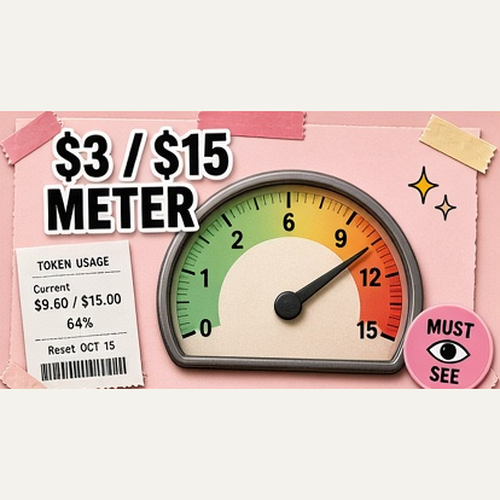
Devin SWE-2 free window ends mid-Oct: budget the $3/$15 meter

What happened (verified 2026-10-11 on Cognition docs): SWE-2 stays free for self-serve Devin Desktop/CLI plans through October 15, 2026 (docs). Marketing/pricing copy still says through October 16. After the free window, list rates apply: $3.00/1M input, $15.00/1M output, $0.30/1M cache input. Enterprise ACU plans keep SWE-2 at 75% off list through December 31, 2026 — that discount does not apply to self-serve seats. Voice-mode live calls use a separate agent model and do not get free or discounted SWE-2. Tool impact: teams treating SWE-2 as an unlimited free frontier habit will feel a sudden agent-meter cliff on top of Pro ($20) / Max ($200) / Teams seats; Windsurf→Devin Desktop rename and Cascade→Devin Local already stand.

Switch? Try: if Devin Desktop/CLI is already your primary agent surface and SWE-2 is your default, burn the free window on real multi-file tickets this week (budget Oct 15 docs / Oct 16 marketing). Measure tokens + finished PRs so you know what list rates will cost. Avoid: adding Devin as a third seat beside Cursor + Copilot just to "use the free SWE-2" — the free window ends mid-Oct and the $3/$15 list meter is not a free forever seat. Don't assume Enterprise ACU 75% off through Dec 31 applies to self-serve. Next: (1) budget as if Oct 15; (2) after the cliff, stay on cheaper models inside quota, pay list on SWE-2, or keep one primary agent elsewhere; (3) re-verify https://docs.devin.ai/desktop/models and https://devin.ai/pricing before you renew. last-verified 2026-10-12.

Open brief →
frontier frontierpricinggeminigoogle featured 2026-10-09

Gemini free tier drops to Flash-Lite Oct 9: who should pay $19.99

What happened (verified 2026-10-07, US GEO): Google’s Gemini Apps help page says model availability for personal accounts changes in October 2026. No-plan users: starting October 9, only Flash-Lite — Flash and Pro leave the free picker. AI Plus ($4.99/mo US list class): keeps Flash-Lite + Flash, loses Pro (timing arrives by email, not necessarily Oct 9). AI Pro ($19.99/mo) and AI Ultra keep Flash-Lite + Flash + Pro; Ultra also gets Deep Think. Effort low/medium/high burns compute limits faster on every plan (limits refresh on a 5-hour / weekly compute meter). Gemini 4 Argon (DeepMind blog Sep 30) is rolling Fairwind cyber defenders first, then paid API + AI Ultra — not a free-tier rescue. Tool impact: free Gemini stops being a “good enough daily Pro/Flash seat” and becomes a lite sandbox; the wallet decision is leave free, stay on $4.99 Plus for Flash only, or jump to $19.99 Pro for Pro-model work. Free chat compare (apps, not API — verify live caps): Gemini free → Flash-Lite only after Oct 9. ChatGPT free → limited GPT chat (no Plus agent headroom). Claude free → limited Claude chat. None of the free lanes replace a paid coding/agent seat.

Switch? Try AI Pro ($19.99) if you already lean on Gemini Pro for long briefs, Deep Research-class work, or Workspace-adjacent gravity and the free cliff will break your week. Avoid staying on AI Plus ($4.99) if Pro was the only reason you paid — after the change Plus is Flash/Flash-Lite, so either drop to free Flash-Lite for light drafts or move to Pro/Ultra; don’t pay $4.99 for nostalgia. Next: this week, note which model you actually pick for real jobs; if it’s Pro, budget $19.99 or switch the seat to ChatGPT Plus / Claude Pro before Oct 9 (free) or before your Plus email date. last-verified 2026-10-07.

Open brief →

frontier frontierpricingclaudeanthropicapi featured 2026-10-07

Claude Haiku 5.5 + Max/Team API credits: cheap under 100k, cliff above

What happened (verified 2026-10-09 on Anthropic docs): Haiku 5.5 prices at $0.10/$0.50 per MTok for prompts ≤100k tokens, then jumps 5× to $0.50/$2.50 above 100k (cache read $0.01 ≤100k / $0.05 above). That is ~75–90% cheaper than Haiku 4.5 ($1/$5) on short prompts, and matches GPT-6 Luna list rates at ≤100k — but long prompts flip: Luna stays cheaper past ~100k/272k. Separately, Max 5x / Max 20x / Team now include monthly Claude Console API credits ($100 / $200 / pooled up to $500) for API + Managed Agents + Agent SDK + playground — not Claude Code, not Claude app overages, not Bedrock/Vertex/Foundry. Credits expire each billing cycle with no rollover; new subscribers wait 7 days; Free/Pro/Enterprise are ineligible. Tool impact: Max buyers who also top up Console finally get included API runway, and short-prompt classification/extraction bots should reprice to Haiku 5.5 — while anyone stuffing >100k context into Haiku pays a silent cliff.

Switch? Try: if you already pay Max 5x/20x or Team and also run Console API side projects, link one Console org this week and turn off auto-reload so spend stops when included credits end. Route short classification/extraction/support bots to Haiku 5.5 when prompts stay under 100k. Avoid: upgrading Pro→Max just for API credits unless you will use both extra chat/Code headroom and the API — credits never cover Claude Code and vanish monthly. Don’t move long-context (>100k) pipelines to Haiku 5.5; Luna (or Sonnet with cache) usually wins there. Next: (1) link Console org; (2) re-run your Haiku 4.5 workload and budget ~+25% tokens if the new tokenizer is fattier; (3) recompute Sonnet 5.5 cache-heavy agents at $0.10/MTok cache reads (was $0.20). last-verified 2026-10-09.

Open brief →

frontier frontierpricingdesignapigemini featured 2026-10-06

Nano Banana 2.1 halves Gemini image API cost: when volume beats Midjourney

What happened (verified 2026-10-07 on ai.google.dev pricing): gemini-nano-banana-2.1 paid image output is $30/1M tokens — ≈ $0.0336 per 1K, $0.0504 per 2K, $0.113 per 4K (3,780 tokens). Batch is half. Input is $1.50/1M (text/image/video). Free tier on this image API: not available. vs Nano Banana 2 (gemini-3.1-flash-image): prior 1K was ≈ $0.067 and input $0.50/1M — so 2.1 cuts output ~half at 1K but raises input 3× (hurts reference-heavy edit loops). Tool impact: static-ad / thumbnail / infographic factories on Gemini API get a real $/accepted-image cliff; Midjourney Relax taste clubs and Firefly legal/CC pipelines stay different jobs.

Switch? Try Nano Banana 2.1 API when you ship programmable volume (1,000×1K ≈ $33.60 standard / ≈ $16.80 batch) and text-in-image claims matter — A/B 50 of your real prompts vs current stack and score cost per accepted image. Avoid ripping Midjourney if taste exploration (Relax) is the job, and don’t budget 4K at a 2,520-token guess: official Gemini API prices 4K at 3,780 tokens ≈ $0.113 (batch ≈ $0.0567). Next: keep Pro (Nano Banana Pro / gemini-3-pro-image) for hero stills where quality wins; use 2.1 for variant flood. last-verified 2026-10-07.

Open brief →

frontier frontierpricingchatgptopenai featured 2026-09-29

ChatGPT Pro 500 vs Pro 200: Ultrafast tier and the Oct 30 usage cliff

What happened: At DevDay (Sep 29, 2026) OpenAI added ChatGPT Pro 500 ($500/mo, ~25× Plus usage) as the only Pro tier with Ultrafast (GPT-6 Astra in Work/Codex). Pro 200 stays $200 but its new allowance is ~10× Plus (down from ~20×); eligible existing Pro 200 keep the old envelope through Oct 29, 2026 and drop from Oct 30. Press also reports GPT-6 Pro chat on $200 falling ~200→100 msgs/week after transition (treat as reported until Help Center confirms). A one-time ~62,500 credits (~$2,500) package expires Dec 31, 2026; Ultrafast is reported to burn included usage ~8× faster than Standard. Tool impact: ChatGPT Pro buyers must price Ultrafast + Codex/Work intensity against a permanent Pro 200 cut — Plus or API Sol may win for light/agent-bulk work.

Switch? As of 1 Oct 2026: don’t auto-upgrade to Pro 500 unless Ultrafast + heavy Codex/Work is daily. Grandfathered Pro 200 must model the Oct 30 cliff before renewing. Light chat → Plus or API Sol.

Open brief →

frontier frontierpricingopenaiapi featured 2026-09-29

GPT-6.1 Sol API pricing: near-Astra quality at lean token rates

What happened: OpenAI published GPT-6.1 Sol API list rates — Input $2 / Cached input $0.10 / Cache writes $2.50 / Output $10 per 1M tokens, with ~1.05M context and 128K max output — positioned as near-Astra capability at a cheaper API SKU. Tool impact: ChatGPT/Codex product seats stay separate; for bulk API and agent loops, Sol becomes the default meter while Astra stays a critical-path A/B. Long prompts (>~272K input) and Fast mode multiply spend; Batch/Flex remain the cheaper queues when latency allows.

Switch? As of 1 Oct 2026: default Sol for bulk API/agent loops; A/B Astra only on critical paths where finish quality or latency justifies the premium.

Open brief →

frontier frontierpricingclaudeanthropic featured 2026-09-28

Claude Sonnet 5.5: same $2/$10 list price, lower effective $/task (if scoped)

What happened: Anthropic’s Sep 28, 2026 Sonnet 5.5 launch keeps list rates unchanged vs Sonnet 5 ($2 input / $10 output per MTok; cache read was $0.20 at launch; as of 2026-10-09 docs cache hits are $0.10 (0.05× input)) while claiming up to ~30% less $ per task and 30%+ faster via fewer tokens/steps. Opus 5.5 sits at $4/$20 as the judgment tier. Migration note: Sonnet 5 apps may hit breaking changes (between_tools, thinking/tool shape). Tool impact: sticker parity is not bill parity — Cursor / Claude Code / API agent loops should re-measure $/merged-PR for a week; Max effort or messy tool-loops can erase the savings.

Switch? As of 9 Oct 2026: switch API/default agent traffic to Sonnet 5.5 this week if jobs are well-scoped coding/docs; keep Opus 5.5 for open-ended judgment. Don’t treat same $2/$10 as same monthly burn — re-measure $/merged-PR for 7 days, and recompute cache-heavy loops at $0.10/MTok cache reads. At Max effort some third-party notes say cost can rise — verify on your traces. Pair with the new Haiku 5.5 + Max API credits card for short-prompt overflow.

Open brief →

frontier frontierpricingcodingclaude-code featured 2026-09-14

Claude Code weekly limits: permanent +25% vs summer promo math

What happened: September 2026 coverage notes Anthropic moving to a permanent +25% Claude Code weekly limit vs pre-May baseline while ending a larger temporary summer promo—netting a cut versus what heavy users enjoyed since May. Tool impact: Claude Code power users who sized habits to promo ceilings feel a squeeze; Cursor/Codex look relatively steadier if your pain was weekly caps, not model quality.

Switch? As of 29 Sep 2026: if Claude Code habits were sized to the summer promo ceiling, re-measure weekly headroom before renewing Max — promo math is not renewal math. Add Cursor/Codex only as overflow with a budget owner.

Open brief →
frontier gamesdesignfrontieragents featured 2026-09-10

AI in the game pipeline: NPC dialogue, concept art, greybox — not another model dump

Indie builders on X are posting gameplay videos of AI-assisted pipelines: one-prompt survival prototypes, fan RTS experiments, web-game alphas, and image-gen terrain for procgen. The useful signal is where AI sits in the pipeline (dialogue drafts, concept kickoff, greybox, terrain authoring) — not the hype that a full shippable game fell out of a single prompt. We curated four clips below as evidence; keep humans on beat sheets, lore locks, and anything that ships unedited.

Switch? Watch the clips, then adopt AI only on disposable scenes (greybox lines, mood frames, terrain drafts). Do not reorganize your studio around ‘one prompt = shipped game’ posts.

Open brief →

frontier gamescodingagentsfrontier featured 2026-09-10

Unity ships an official AI-agent plugin — game pipelines meet coding agents

Builders on X are circulating demos of Unity’s official plugin for AI agents (originally Claude Code-oriented, also called out for Codex/Grok). The pitch is 29 Unity-authored skills spanning UI, graphics, audio, physics, scenes — agents that can touch the editor instead of only dumping C# into chat. This is the games×agents crossover: not “AI made a game in one prompt,” but “agent runtime inside the DCC/engine.”

Switch? Worth a sandbox week if your team already lives in Unity and burns time on boilerplate editor chores. Do not rip out art direction or design reviews — agents in Unity still need human locks on feel, economy, and ship criteria.

Open brief →

frontier frontiercodingv0 featured 2026-09-09

v0 adds one-click Marketplace integrations (auth, email, DB, search)

What happened: Vercel’s v0 changelog (Sep 9, 2026) adds Marketplace connect cards in-chat for Resend, Clerk, MongoDB Atlas, Algolia, and Amazon OpenSearch—auto env setup plus provider skills for recommended patterns. Tool impact: v0 moves from “pretty React mock” toward “scaffold a real app slice with auth/email/search wired,” tightening the gap with Replit Agent for greenfield demos while staying in the Next.js/Vercel gravity well.

Switch? If you already ship on Vercel/Next, use v0 integrations for MVP glue—don’t open Replit just for Clerk/Resend scaffolding. If you’re not on Vercel, this isn’t a stack-conversion event.

Open brief →

frontier designfrontierwriting featured 2026-09-09

Design seats for ads: Firefly Boards vs ChatGPT Images volume

X creators are posting workflow videos of two different ad jobs: Adobe Firefly + Firefly Boards for structured product ads on an infinite canvas, versus ChatGPT Images pipelines that mass-generate dozens of static ads from a product angle. The info gap is role separation — Boards for art-direction memory; ChatGPT Images for volume variants — not “one model to rule campaigns.” API volume note (2026-10-07): for headless static-ad floods, Gemini Nano Banana 2.1 API (~$0.0336/1K standard) is a third lane vs Boards structure and ChatGPT Images chat volume — see nano-banana-21-image-api-price-cut-2026.

Switch? Keep Firefly/CC if legal + Photoshop handoff matter; use ChatGPT Images when you need fast static-ad variants inside a chat seat you already pay for. Midjourney stays for taste kickoffs, not always-on ad factories.

Open brief →
frontier codingagentsfrontiercopilot featured 2026-09-09

Copilot embedding Claude Code: one seat debate just got messier

X demos show GitHub Copilot settings unlocking Claude as a coding agent inside the existing Copilot subscription — same agent loops, different brand on the invoice. The scene is seat consolidation theater: teams that already pay Copilot may get Claude-style agents without buying a second IDE religion. Try: Claude-in-Copilot on real PRs for two weeks if Copilot is already standard. Avoid: treating a settings toggle as a migration, then stacking Cursor anyway. Next: decide with the Cursor vs Copilot compare — pick one primary agent surface.

Switch? As of 2 Oct 2026: a Claude toggle inside Copilot is not a Cursor migration. If Copilot is org-standard, trial that agent path before buying another seat religion; if multi-file IDE gravity is the pain, measure Cursor on real tickets for 14 days. Still don’t run Copilot + Cursor + Claude Max on the same tickets.

Open brief →
frontier gamescodingagentsfrontier featured 2026-09-09

Unity’s official Claude Code plugin: agents enter the engine (not just chat)

Unity published a first-party plugin that installs engine skills, Unity CLI, and MCP for live Editor control inside Claude Code (with GitHub repo + docs stating Codex/Grok support later/alongside). This is a pipeline story: agents stop being “paste C# into chat” and start holding Unity’s own answers for atlases, URP features, UI Toolkit jobs. Pair that with GitHub’s own changelog that Claude/Codex agents ride inside Copilot subscriptions — seat choice is governance + meters, not brand loyalty.

Switch? Sandbox the Unity plugin if you already ship in Unity 6+ and burn time correcting agent “internet lore.” Do not replace art direction or economy design reviews. Separately: if GitHub is your source of truth, trial Claude/Codex partner agents inside Copilot before buying a third coding religion.

Open brief →
frontier frontiercodingagentsclaude-code featured 2026-09-06

Claude Code ships unattended CI path + skill audits (Sep 2026)

What happened: Anthropic’s early-September Claude Code point releases (2.1.257→2.1.263) stack into a real ops story—managed MCP settings, `--permission-prompts none` for headless denies, fullscreen `/diff`, `/skill-doctor` for unused skills burning context, and Fable 5.1 as default Fable model (1M context; listed $10/$50 per Mtok class rates—verify). Tool impact: Claude Code stops being only an interactive terminal buddy and becomes plannable for CI/unattended hosts—if you trust deny-by-default permissions. Cursor users feel this as gravity toward Claude-backed agent loops even when the IDE stays put.

Switch? If you already run Claude Code, upgrade and trial headless on a throwaway pipeline this week. Don’t rip out Cursor/Copilot solely for this—use Claude Code where unattended repo agents belong.

Open brief →
frontier pricingagentsfrontier 2026-09-05

Inference + agent-loop cost narrative: stack pricing gaps

2026 discourse keeps circling the same gap: list prices hide agent-loop burn (plan → tool → retry → summarize). Teams comparing Cursor, Copilot, Claude Code, and raw API stacks are discovering total cost of ownership diverges hard once agents run unattended.

Switch? Don’t switch tools for a $20 sticker difference — switch (or split) when your measured $/merged-PR or $/resolved-ticket diverges for 2+ weeks.

Open brief →
frontier frontierpricingcoding featured 2026-09-04

Claude Fable 5.1 vs GPT-6 Astra: reported coding price parity

What happened: September 2026 discourse frames Anthropic Fable 5.1 and OpenAI GPT-6 Astra-class coding models as converging near $10/$50 per Mtok list rates (verify on lab pricing pages). Tool impact: sticker-price shopping between Claude Code and Codex gets less interesting; workflow (terminal vs cloud vs IDE router) and mid-tier options matter more than who is $2 cheaper on the frontier SKU.

Switch? Stop switching stacks for frontier list-price deltas this month—pick the loop you finish tickets in. Re-evaluate only if mid-tier (e.g. Sonnet-class) quality/cost diverges on your repo.

Open brief →
frontier frontiercodingpricingcopilot 2026-09-03

Gemini 3.8 Flash lands in GitHub Copilot model picker

What happened: GitHub added Gemini 3.8 Flash across Copilot Pro/Pro+/Max/Business/Enterprise surfaces (VS Code, JetBrains, CLI, cloud agent, etc.), billed at introductory provider pricing under usage-based credits through Dec 31, 2026 (verify). Tool impact: Copilot’s post–AI-Credits world gets a speed/recovery-oriented Google model option—another reason model routing inside Copilot matters as much as “which IDE.”

Switch? Enable Flash for terminal-heavy / retry-prone tasks if you’re already on Copilot credits—don’t switch IDEs for a model picker row. Admins: check model policy so Business/Enterprise don’t auto-enable surprise spend.

Open brief →
frontier frontiercodingchatgptcodex featured 2026-09-03

GPT-6 Astra rolls into ChatGPT, Codex, API, Azure, Bedrock

What happened: OpenAI launched GPT-6 Astra as its broadly deployed frontier model for ChatGPT (Plus→Enterprise rollout), Codex, the API, Azure, and Amazon Bedrock—with Astra Pro on higher plans and Enterprise off-by-default until admins enable. Tool impact: ChatGPT and Codex jump a generation together; Cursor/Claude Code buyers feel pressure on “default smart model” gravity even if they keep their IDE.

Switch? If you already pay OpenAI, enable Astra where available and retest your hardest ChatGPT/Codex loops before buying another seat. Don’t rip Claude Code/Cursor solely because Astra launched—measure finish quality on your tickets.

Open brief →
frontier frontiercodingagentscodex featured 2026-09-03

Codex + Astra: searchable notes across context windows

What happened: Alongside Astra, OpenAI updated the Codex harness for faster computer use and introduced an experimental cross-window notes/search path so long refactors don’t lose failure reasons to compaction. Tool impact: Codex becomes more competitive with Claude Code on multi-hour debugging memory—not just raw model IQ.

Switch? Turn the experimental notes feature on for long Codex sessions this week. Switch from Claude Code only if your team is already OpenAI-native and context loss was the pain—not for a blog demo.

Open brief →
frontier frontiercodingcodex 2026-09-03

OpenAI Codex CLI adds Vim mode, plugin marketplace, auto-recaps

What happened: Codex CLI 0.153.0 (early Sep 2026 coverage) adds Vim-style editing, a plugin marketplace install path, automatic session recaps, richer history, and earlier rate-limit warnings for Plus/Team. Tool impact: Codex gets more “daily terminal IDE” muscle, narrowing the lifestyle gap with Claude Code for developers who refuse a separate AI GUI. Still a different gravity well than Cursor’s multi-file IDE agent.

Switch? Worth enabling if you already pay OpenAI and live in the terminal. Not a reason to abandon Cursor if the IDE agent UX is your bottleneck—or Claude Code if unattended/MCP policy is.

Open brief →
frontier frontierriskpolicy 2026-09-03

Astra hits Critical cyber capability — gated Daybreak SKUs still matter

What happened: OpenAI’s safety overview says GPT-6 Astra is the first broadly deployed model to reach Critical cybersecurity capability under its Preparedness Framework, with stronger alignment/refusal behavior—and separately notes higher cyber-focused SKUs remaining in constrained programs (Daybreak-style). Tool impact: capability headlines will spike; availability for everyday coding agents is not the same as gated cyber SKUs.

Switch? No panic-switch for normal app development. Treat Critical cyber labeling as a policy/eval event for security teams—not a reason to abandon Claude/Cursor stacks tomorrow.

Open brief →
frontier frontiercodingpricing featured 2026-09-02

Gemini 3.8 Flash oriented at coding workflows

Google’s Gemini line is being positioned (orientation, verify SKUs) toward faster coding loops — Flash-class latency for autocomplete, edits, and agent steps. That reframes model picks inside Cursor, Claude Code, and Gemini-native surfaces.

Switch? Worth A/B testing for speed-sensitive edits; don’t dump Claude for deep refactors until quality holds on your repo.

Open brief →
frontier frontierdesignwriting featured 2026-09-01

Canva Magic Layers lands inside ChatGPT and Gemini

What happened: Canva shipped Magic Layers into ChatGPT and Gemini image flows—turning a flat AI image into editable layered Canva objects—plus broader Canva AI connectors into major assistants. Tool impact: ChatGPT Images / Gemini gens stop being dead-end PNGs for marketing teams already on Canva Brand Kits. Midjourney still wins raw taste; Canva wins “ship the post tonight.”

Switch? If Canva is your publish surface, turn Magic Layers on and stop screenshotting chat images into Design. Don’t abandon Midjourney for hero art taste—route finals through Canva when layers/brand kits matter.

Open brief →
frontier frontierdesignagentsfigma featured 2026-09-01

Figma lets agents edit shaders/plugins via MCP — React handoff

What happened: Figma’s Sep 1, 2026 update expands generative plugins/shaders (animated/interactive), community/org publishing, downloadable shader/plugin code, and MCP so third-party agents (e.g. Claude Code workflows) can inspect/change effects and carry them into React. Design agent remains open beta for Full seats; free in beta then AI credits. Tool impact: Figma AI stops being only in-canvas assist—it becomes an agent-readable design surface competing with v0 for “design→code” ownership.

Switch? If Figma is already SoR, enable MCP + trial agent shader flows before buying another UI codegen seat. Don’t abandon v0 if your artifact must be production React tomorrow—use Figma when design fidelity/shaders are the bottleneck.

Open brief →
frontier codingpricingfrontier 2026-09-01

Copilot vs Cursor: model-routing as the real switch decision

With OpenAI access friction (reported) and Claude/Gemini rising as coding defaults, the 2026 switch question is less “which IDE?” and more “which model router sits closest to your repo?” GitHub Copilot’s platform embedding vs Cursor’s model-picker flexibility is the live tradeoff.

Switch? Stay on Copilot if GitHub PR/CI gravity is your bottleneck; stay on Cursor if multi-model routing and agent UX matter more than Microsoft stack glue.

Open brief →
frontier frontiercodingagents featured 2026-09-01

Windsurf Cascade on JetBrains: agent gravity outside VS Code forks

Correction (verified 2026-10-06): Windsurf is now Devin Desktop; Cascade was replaced by Devin Local and the JetBrains plugin is in maintenance mode — see our updated Devin Desktop page. Cognition renamed Windsurf to Devin Desktop on 2 June 2026. Cascade was kept only through July, Cascade inside the JetBrains plugin is deprecated, and the vendor now recommends running Devin over ACP in JetBrains. Updated buyer card with current prices: /tools/windsurf.html (https://ai.126678.space/tools/windsurf.html). Original summary (2026-09-01, now outdated): What happened: Windsurf’s Cascade continues to be positioned as an agentic coding layer with Write/Chat modes, terminal execution levels (Off/Auto/Turbo), and JetBrains plugin gravity—not only a Cursor competitor in VS Code-land (verify current docs). Tool impact: teams refused to leave IntelliJ/PyCharm now have a credible “agent in my real IDE” story, which reframes Copilot ubiquity vs Cursor fork lock-in.

Switch? Corrected 2026-10-06: don't pick Windsurf for Cascade-in-JetBrains any more — that plugin is in maintenance mode. JetBrains-native teams should test Devin over ACP or stay with their current agent; read the updated Devin Desktop page before buying seats.

Open brief →
frontier frontierpricingcoding featured 2026-08-28

OpenAI reportedly tightening Cursor access to OpenAI models

Reports in 2026 discourse claim OpenAI is restricting or re-pricing Cursor’s access to OpenAI models; Cursor-side commentary has oriented around OpenAI traffic being a minority share (~5% cited in community discussion — verify). Impact lands hardest on Cursor users who defaulted to GPT-class models inside the IDE.

Switch? Don’t panic-switch the whole IDE: keep Cursor if the editor UX wins; route model calls to Claude / Gemini / Copilot when OpenAI access is gated or pricey.

Open brief →
frontier frontiercodingagents featured 2026-08-20

Claude Code + agent/computer-control gravity inside Cursor

Anthropic’s Claude Code and broader agent / computer-control narratives are pulling serious coding workflows toward Claude-backed stacks — including as a preferred model path inside Cursor. Gravity is product-habit, not just benchmark slides.

Switch? If you already live in Claude Code, stay; if you’re Cursor-first, keep the IDE and bias model pick to Claude where quality matters — switching IDEs is optional.

Open brief →
frontier frontierdesignadobe featured 2026-08-20

Adobe Firefly GA for music, speech, and SFX in one studio

What happened: Adobe made Firefly’s Generate Music / Speech / Sound Effects generally available and keeps pushing Firefly as a multi-model creative studio (partner models + Adobe tools), with Firefly AI Assistant still rolling as an agentic orchestrator for Creative Cloud workflows (Apr beta → ongoing skills). Tool impact: Firefly stops being “just generative fill in Photoshop” and competes as a one-stop campaign factory—against Canva Magic for SMB speed and Midjourney for still taste.

Switch? If your files already finish in Photoshop/Premiere, trial Firefly audio+assistant in-place—don’t bounce to Canva. If you’re not on Creative Cloud, this isn’t a reason to buy CC solely for audio gens.

Open brief →
frontier frontierdesignpricing featured 2026-08-15

Midjourney subscription vs Flux API economics (2026)

What happened: 2026 compare discourse keeps splitting image buyers into two camps—Midjourney’s closed subscription aesthetic engine (Basic→Mega GPU-hour ladders; Stealth on higher tiers) versus Flux/Black Forest Labs open-weight + pay-per-image API paths (Pro-class ~$0.04/image class quotes—verify). Tool impact: ChatGPT Images stays the convenience lane; Canva Magic stays template ops; serious product/marketing pipelines now ask “taste club vs typography/API control.” Flux still isn’t a first-class ToolGap directory row—treat as external rival in Midjourney decisions. API volume note (2026-10-07): Gemini Nano Banana 2.1 paid image API now ≈ $0.0336/1K ($0.0168 batch) with no free API tier — see nano-banana-21-image-api-price-cut-2026 before you assume Flux is the only sub-$0.04 programmable path.

Switch? Stay on Midjourney if taste + unlimited Relax exploration is the job. Pivot toward Flux/API (or Firefly-in-CC) if you need text-in-image accuracy, privacy defaults, or programmable volume—not if your team can’t operate ComfyUI/API.

Open brief →
frontier frontierriskpolicy 2026-08-15

Labs shipping cyber-capable models behind access gates

Frontier labs are reportedly shipping higher cyber-capability models with gated access, eval harnesses, and use-policy friction. Orientation for builders: capability is rising, but distribution is intentionally constrained — verify release notes and terms before assuming availability.

Switch? No consumer switch required for normal coding — gated cyber SKUs are not a reason to abandon your daily IDE stack.

Open brief →
frontier frontiercodingagentsv0 featured 2026-08-05

v0 API goes GA: headless app generation for other agents

What happened: Vercel made the new v0 API generally available—prompt in, sandboxed running app + preview URL out, deployable via API; positioned as a tool other agents can call. Tool impact: Cursor/Claude Code/custom agents can outsource UI app materialization instead of hand-rolling React. Changes the “who owns the last mile UI” decision inside multi-agent stacks.

Switch? Wire v0 as a tool behind your primary coding agent if UI previews are the bottleneck. Don’t replace Claude Code/Cursor with v0 API for backend-heavy repos.

Open brief →
frontier frontierwritingpricing 2026-07-28

Notion AI as a seat tax: when workspace AI beats a second LLM

Correction (verified 2026-10-06 on notion.com/pricing): Notion no longer sells a ~$10/member AI add-on. Plus is $10/member/mo with Notion AI only as a trial. The real AI (Notion Agent, AI Meeting Notes, Enterprise Search beta) is on Business at $20/member/mo, along with SAML SSO. Yearly billing saves up to 20%. Tool impact: the question is no longer "add AI to my seats?" but "move the whole team from Plus to Business?" That's +$10/member, and you also get SSO and permissions. The other path is to stay on Plus and use Claude or ChatGPT for AI.

Switch? AI now means Business. Notion AI is only worth it if you'd want Business for SSO and permissions anyway. If not, stay on Plus and keep Claude or ChatGPT for AI. Don't move the team to Notion for the AI badge.

Open brief →
frontier frontierdesignriskapi 2026-07-09

Leonardo API retires Sora 2 / Veo 3 paths — migrate or break

What happened: Leonardo’s deprecations doc shows provider-driven retirements through mid-2026—Sora 2/Pro gone (Jul 9), Veo 3/Fast retiring toward Veo 3.1, Motion 1.0 consolidation, plus earlier alias/parameter cleanups. Tool impact: Leonardo buyers who wired video models into pipelines face forced migrations; Midjourney still wins stills taste, Firefly/Canva win brand ops, Leonardo’s API surface is only as stable as upstream video vendors.

Switch? If you depend on Leonardo video APIs, migrate to documented successors (e.g. Veo 3.1) this sprint—don’t start new Sora/Veo3 paths. For stills-only teams, this is a reminder to abstract model IDs, not a reason to dump Leonardo tomorrow.

Open brief →
frontier frontierpricingagents featured 2026-06-01

June 2026: coding AI went metered — stack math changed

What happened: the same week Copilot went to AI Credits, Cursor re-cut Teams usage pools — the broader narrative is that agentic coding killed flat-seat economics. Tool impact: "one cheap seat for everyone" dies; finance wants budgets per agent-minute. Switch-or-not is no longer brand loyalty — it's which surface meters the least for your actual loop (completions vs multi-hour agents). Try: one primary agent seat. Avoid: three agent religions on identical tickets. Next: 14-day A/B test, then cancel the loser.

Switch? As of 2 Oct 2026: don’t multi-home three coding agent seats (Copilot Business + Cursor Pro + Claude Max). Pick one primary agent surface, keep completions where they’re cheap/unlimited, kill silent double-pays, and run the 14-day same-ticket test before renewals — see Cursor vs Copilot compare.

Open brief →
frontier frontierpricingcodingcursor featured 2026-06-01

Cursor Teams dual usage pools + Premium seat (June 2026)

What happened: Cursor reworked Teams seats into two usage pools (first-party / Auto–Composer vs third-party API models) and introduced a Premium seat aimed at all-day agent users (reported ~$120/mo or ~$96 annual). Tool impact: Cursor becomes more predictable for Auto/Composer-heavy teams and more expensive/explicit for Claude/GPT-picker power users. Soft fallback to first-party when the API pool runs dry (reported) is the product stance vs Copilot's harder credit ceiling.

Switch? Stay on Cursor if the IDE agent UX is why you pay; buy Premium only after two weeks of measured third-party pool burn. Don't switch to Copilot just for a lower seat sticker if you live in Cursor daily.

Open brief →
frontier frontierpricingcodingcopilot featured 2026-06-01

GitHub Copilot flips to AI Credits (usage billing) — June 1, 2026

What happened: GitHub moved all Copilot plans from premium-request counting to GitHub AI Credits (token-based). Completions / next-edit stay unlimited on paid plans; agent, chat, coding agent, and related surfaces burn credits. Seat list prices held (Pro/Pro+/Business/Enterprise) while included credit pools define how far agent work goes. Tool impact: Copilot stops feeling like a flat autocomplete tax and starts feeling like an agent budget. Teams that live in PR review + agent loops will hit credits first; tab-complete-heavy users may barely notice. Update 2026-10-02 (GitHub Changelog): Opus 4.7, Gemini 3.5 Flash, Gemini 3.6 Flash, and Kimi K2.7 Code are deprecated in Copilot; suggested replacements are Opus 5.5, Gemini 3.8 Flash, and Kimi K3. Copilot Enterprise admins may need to enable replacements via model policies. Separately, since Sep 28, 2026, Copilot code review Default effort resolves to Balanced (explicit Lite stays Lite) — check effort/credit burn on auto-reviews; don’t assume Balanced costs more unless your meter shows it.

Switch? As of 7 Oct 2026: don’t rip Copilot if GitHub is still your gravity — set per-user AI Credit budgets, migrate workflows off retired models (Opus 5.5 / Gemini 3.8 Flash / Kimi K3), and confirm Enterprise model policies. Switch (or add Cursor/Claude Code) only if agent work is the daily job and credits throttle you before PRs ship. For code review, pin Lite explicitly if Balanced depth isn’t worth the burn on routine PRs.

Open brief →
frontier frontiercodingagents 2026-03-11

Replit Agent 4: parallel tasks and design-to-code creative flow

What happened: Replit positioned Agent 4 around parallel sub-agents/tasks, tighter iteration, and broader “outcomes not just apps” creative workflows (design-to-code, less context switching)—dated Mar 2026 but still shaping 2026 buyer comparisons vs v0/Cursor. Tool impact: browser-only builders get a stronger “many tasks at once” story; production monorepo teams still won’t move off GitHub+Cursor/Copilot for this alone.

Switch? Trial Agent 4 for greenfield demos and parallel prototype tasks. Don’t migrate production services onto Replit because of Agent 4 marketing—keep GitHub as source of truth.

Open brief →